Bateman Road, Morecambe
Asking £125,000
- End value, refurbished
- £187,500
- Cost to get there
- £41,002
- Most you can pay
- £115,248
Asking £125,000 against a maximum of £115,248 — a conversation worth having.

How it works
Every result is the same arithmetic run on the same evidence. This is that arithmetic, step by step, with where each figure comes from and what it assumes.
Published 18 August 2026 · Updated 5 September 2026
We take recorded sale prices near the property, matched to its type and roughly its size — a three-bedroom terrace is not evidence for a four-bedroom detached, and a flat is not evidence for a house at all. Where floor areas are known we work in price per square foot and scale it to the property, because the house you are looking at is rarely the same size as its neighbours. Where floor areas are missing we fall back to sale prices directly, which is cruder, and we say so.
We take the upper quartile of that evidence rather than the middle of it. This figure is what the property is worth finished, and the appraisal has already charged you for finishing it. Measuring the result against the average of every nearby sale — refurbished and tired alike — pays for the work and then values the outcome as though the work had not happened. Both cannot be right.
We start half a mile out. Where there is not enough there we widen to a mile, and then two, and stop — past that the evidence stops describing the same market. We use the tightest radius that gives us enough, and we tell you how far we had to look.
If there is still not enough, we will not give you a figure. A valuation from one or two sales is just a sale, and every other number would inherit it.
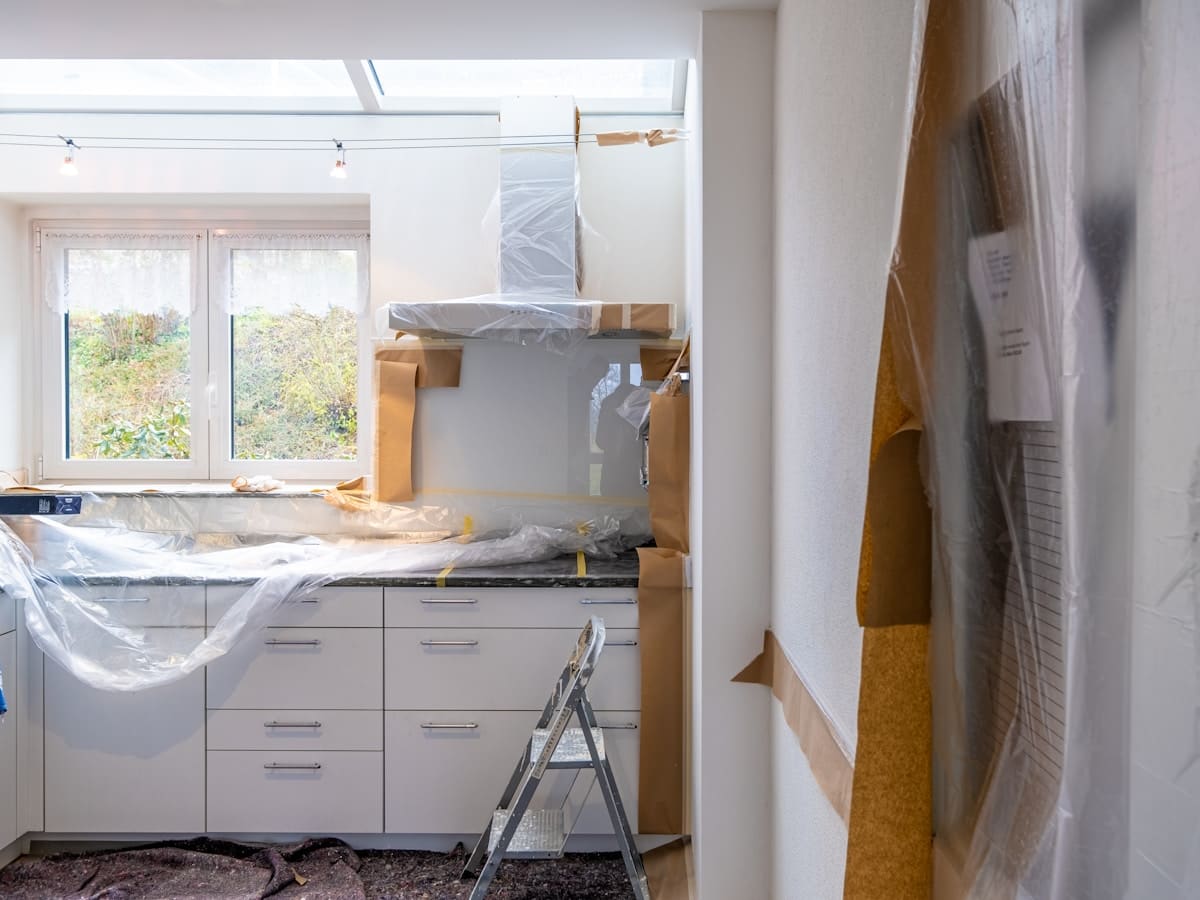
Whether a property needs work changes everything downstream, so we read the listing rather than assuming. Both halves of it: the agent's own words, and the photographs.
The words come first where they say anything. An agent does not write "in need of modernisation" about a house that has just been done. But most listings say nothing either way — a search result carries about 258 characters of a description that averages 2,700, and the sentence about condition is usually past the cut. So the photographs decide the rest, and they are more honest than the copy: praise is written to sell, a dated kitchen is just a fact.
We show you what we read it from, so you can disagree with it. It is a reading of an advert, not a survey, and it will sometimes be wrong.

The refurbishment is itemised room by room — kitchen, bathrooms, each bedroom, living and dining rooms — based on how much work you tell us it needs. Then professional fees (surveyor, legal, and for heavier work an architect and structural engineer), a contingency on top of both, stamp duty, and bridging finance.
A contingency is not optional. A refurbishment appraisal without one is optimistic to the point of being misleading.
A limited company always pays the additional-dwelling surcharge — there is no first-property exemption for a company, whatever else it owns. An individual pays it only when buying an additional property; someone buying a place to live in and refurbish pays standard rates, which at £125,000 is £6,250 cheaper.
That is why we ask at the start rather than assuming. The full bands are here.
These are the England and Northern Ireland rates. Scotland and Wales tax property under their own systems, which this tool does not yet model — treat its figures for those countries as wrong rather than approximate.
Take the end value. Subtract every cost, and subtract the profit you told us you need. What is left is the most you can pay.
There is a wrinkle: stamp duty and bridging interest both depend on the purchase price, which is the thing we are solving for. So we solve it properly rather than approximating — within any one stamp duty band the relationship is a straight line, so it can be worked out exactly rather than guessed at and refined.
Asking £125,000
Asking £125,000 against a maximum of £115,248 — a conversation worth having.
Every card carries a verdict. What it measures depends on whether the property needs work, because the two are different bets.
Graded on the asking price against the most you could pay.
Graded on what the asking price returns against the end value.
Both start from the same place: the work is done, the property is worth its end value, and the bridge has to be repaid. They differ in what happens next, and every property page shows both.
The sale clears the bridge and the rest comes back as cash, less the agent and conveyancing that only a sale pays. You have your money and a profit, and you no longer own anything.
A lender advances 75% of the finished value. That clears the bridge, and whatever is left comes back to you. You get less cash out than a sale, but you still own the house and it can be let. The page shows what went in, what came back, and how much of your money is still in the deal — where the advance exceeds what you put in, the deal has cost you nothing to keep.
The figures the arithmetic runs on each have a default, and each can be changed — under "More options" before you search, and on any property page afterwards, where every number moves as you do.
| Assumption | Default | What it does |
|---|---|---|
| Buying as | Limited company | Sets the stamp duty. An individual is asked whether it is an additional property. |
| Refurb level | Light | How much work the room-by-room schedule assumes. Heavy costs more per room and adds the fees heavier work needs. |
| Target return | 20% of cost | The profit you need on everything the deal costs. A higher target means a lower maximum. |
| Contingency | 10% | Added on top of the refurbishment and fees, for what a survey or an opened wall turns up. |
| Bridging | 1% a month, 6 months | The finance while you hold and refurbish, advanced at 75% of the purchase price. Both figures are costs of the deal. |
Every search appraises what it finds, and what it finds stays. The deals — below market value, or worth buying once the work is done — are kept against the town and drawn on its page as they appeared in the search. Open one and it is priced again against today's evidence. Listings are checked in turn and removed once they have left the market.
Some things cannot be appraised at all: land, park homes and auction lots, where there is no end value to measure or the guide price is a floor rather than a price. They are shown and flagged with why, rather than quietly removed.
Estimates, not advice, and not a valuation. Every figure is a starting point for your own due diligence. Check the comparables yourself, get real quotes for the work, and take professional advice before committing to anything.